
A 6-minute read for actors, models, dancers, and presenters who keep getting overlooked and don't know why.

There's a quiet moment in every casting process most performers never see.
It happens before the audition. Before the callback. Before the recall. It happens when a casting director, an associate, or a producer's assistant opens a folder of submissions on a Monday morning, makes a coffee, and starts scrolling.
I've sat in that room. I've watched it happen.
The average time spent on each profile, in those early rounds, is about 7 seconds.
Seven seconds to look at the photo. Seven seconds to clock the tags. Seven seconds to decide whether you go in the "yes" pile, the "maybe" pile, or the much bigger "next" pile.
Most performers think they're being judged on talent.
In those 7 seconds, talent is not what's being judged.
What's being judged is whether your profile makes sense.
After 10 years on the production side, I've watched the same 3 mistakes kill submissions over and over. None of them are about your craft. All of them are 5-minute fixes. Almost no one makes them.
Here they are.
Mistake 1: Your headshot doesn't match your tags
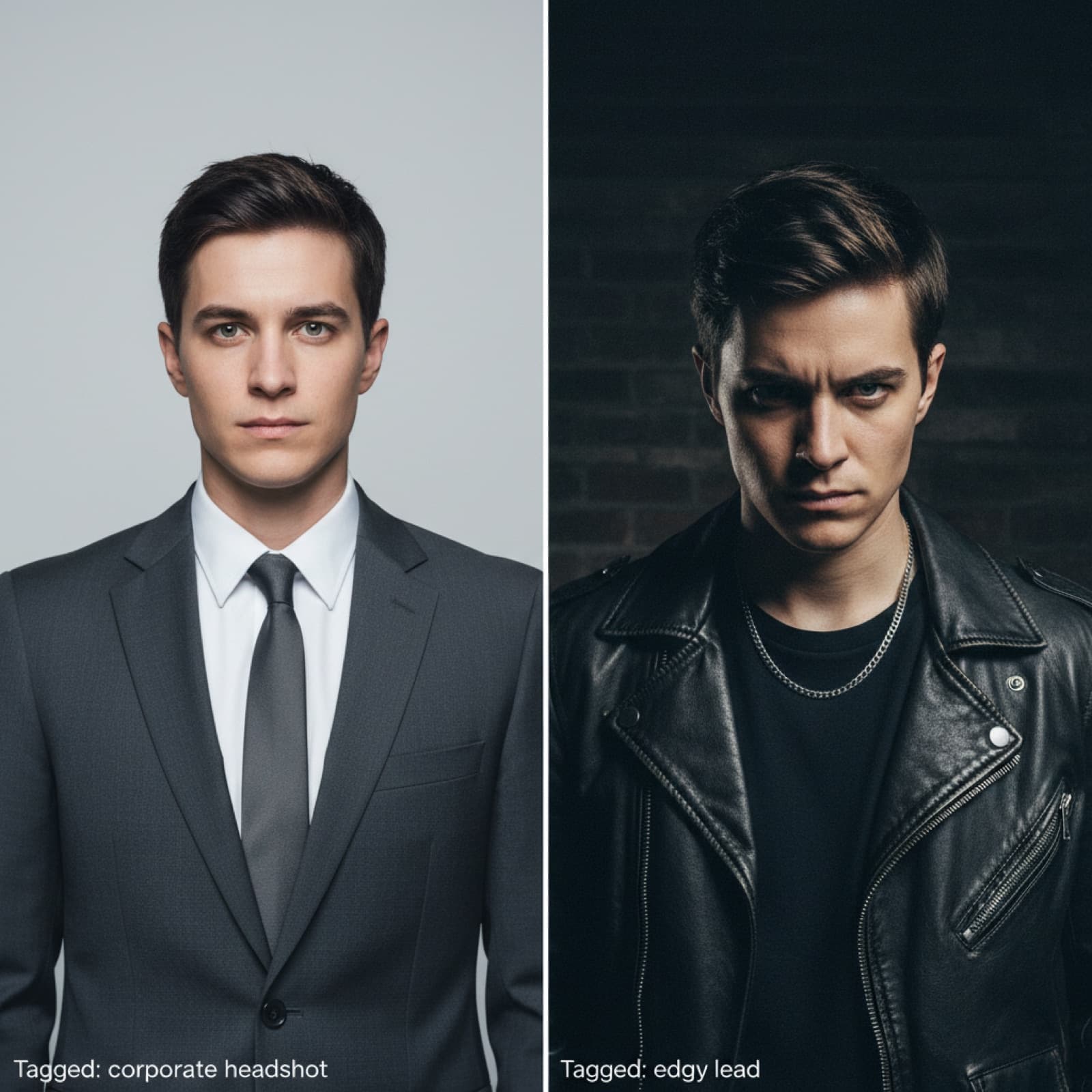
When a casting director scrolls a submission grid, they're pattern-matching at speed. Their brain is running a single question: does this person look like the part?
If your tags say "edgy lead" and your headshot looks like a corporate accountant, their brain hits a friction point. They don't slow down to figure it out. They scroll on.
This isn't them being shallow. This is them processing 400 submissions before lunch.
The fix: your headshot should visually argue the same case your tags argue.
If you're tagged for grounded, working-class roles, you shouldn't be in a clean studio backdrop with a polished smile. If you're tagged for high-fashion editorial, you shouldn't be in a soft, friendly, accessible portrait. If you're a contemporary dancer, your image shouldn't be a ballet pose. If you're a serious presenter, you shouldn't be smiling like a wedding photographer told you to.
Take 10 minutes today. Open your three most recent images next to your three most recent tags. Ask honestly: do these tell the same story?
If they don't, that's why your submissions aren't moving.
Mistake 2: Your reel buries the lead
The second test happens the moment they click your reel.
You have 8 seconds.
If they're not hooked in 8 seconds, they hit the next submission. They are not being cruel. They are being efficient.
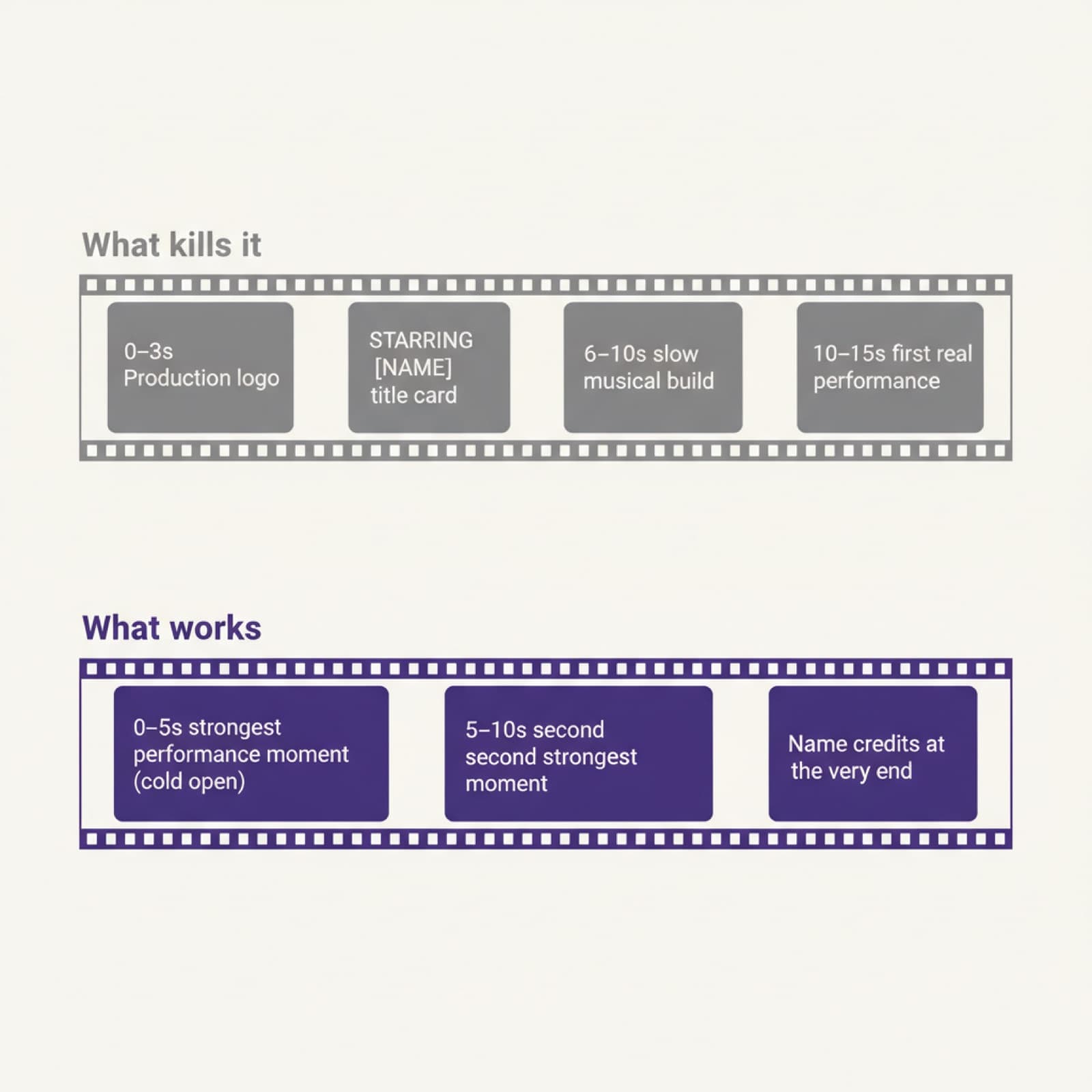
What buries the lead, and gets your reel skipped:
A production company logo for the first 3 seconds. A "starring" title card with your name. A slow musical build before any actual footage. A black screen with text. A montage of you walking, laughing, or "being cinematic" before any real work appears.
These all feel professional. They are not professional. They are wasted time.
The fix: open with the strongest 5 seconds of work you have. Not the most expensive production. Not the most famous director. The strongest performance moment. Cold. Dropped in. No setup. Then your second strongest moment. Then your third.
Credits go at the end, if at all. The casting director will look you up if the work is strong. They never look you up if they've already clicked away.
If your reel currently opens with anything other than your face doing the thing you want to be cast for, recut it this week.
Mistake 3: Your skills section reads like a CV
The third place a casting director looks is your skills, and this is where most performers throw away their advantage.
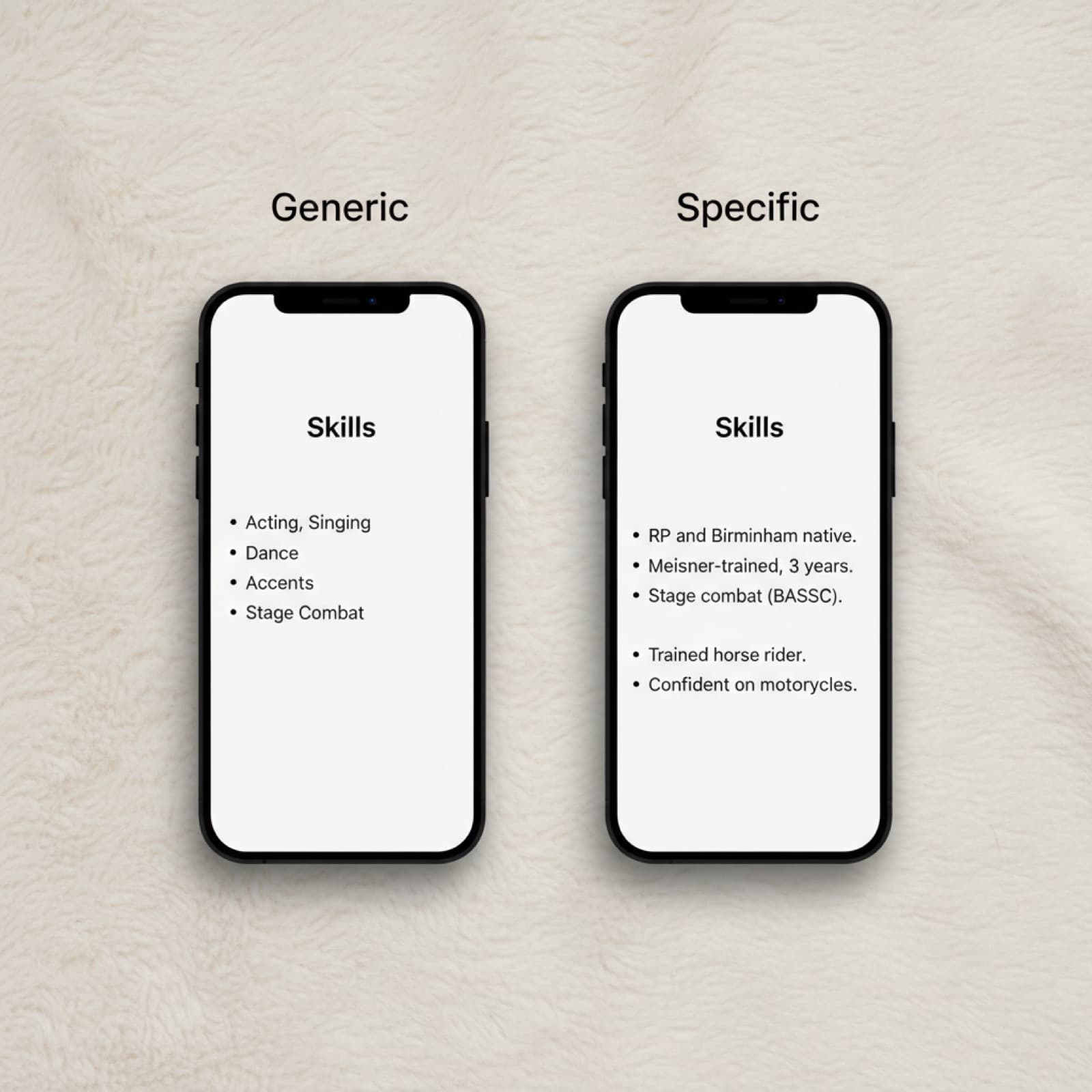
The generic skills section reads like every other one in the industry: "Acting. Singing. Dance. Accents. Voiceover."
This tells the casting director nothing. Everyone in the system claims those things. None of it is searchable. None of it is castable.
The specific skills section earns the booking.
If you're an actor: which accents, at native level versus learned level? Which training methods, for how long? Which physical skills, with which qualifications (BASSC, Equity, etc)? What languages, at what fluency? Can you actually drive a manual? Do you actually ride?
If you're a model: which markets are you genuinely built for (commercial, editorial, fitness, plus-size, mature, alternative)? What are your real measurements, not aspirational ones? What are your unusual castable features?
If you're a dancer: which styles, with which teachers or schools? What's your training lineage? Contemporary with a strong contact-improv background and contemporary with a Cunningham foundation are completely different castings, and casting directors who know what they're looking for know the difference.
If you're a presenter or voice artist: which subject areas have you worked in or studied? Which tones do you actually own (warm, authoritative, conversational, irreverent)? Which formats? Which audiences?
Specific gets cast. Generic gets skipped.
The casting director is trying to find someone they can confidently put in front of a director or client and say, "this is the one." You either give them the language to do that, or you don't.
Why these three matter more than your training

Most performers spend years on training, classes, networking, and headshot upgrades, and almost no time on the profile itself.
This is backwards.
Your profile is the only thing the industry sees before they decide whether to see you. Every other investment, all the training, the showreels, the agents, only pays off if your profile is doing its job in those first 7 seconds.
The good news: each of these fixes takes minutes, not months. A headshot audit. A reel recut. A skills rewrite. You can do all three in an afternoon.
Where to put the work
3Light Talent was built by people from the production side, for emerging UK creatives. We've seen the briefs. We've talked to the hirers. We know what's actually being looked at, because we've been the ones looking.
If you're going to update your profile this week, do it somewhere that actually drives jobs your way. The platform is built around real briefs from real hirers in commercial, corporate, and emerging-creator work. The kind of work that pays, builds your reel, and compounds.
If your profile isn't built around these 3 things, you're invisible. Even when the right role lands in front of the right person, they can't see you.
Fix the 7 seconds, and everything else gets easier.
Coming next week: the 4 self-tape mistakes that quietly cost UK actors callbacks, from someone who's watched too many great performers get cut for fixable reasons.